Disposable compostable tableware is not a foreign word, unless you wander off or nod off while reading environmental policy. Composting is a process in which fungi, bacteria and other microorganisms decompose organic matter naturally and produce nutrient-rich humus or compost. Successful composting requires management of the decomposition process to make it relatively fast, safe and clean.
Compostable food packaging and organic food provide the opportunity to move from landfills into tons of waste-returning valuable nutrients to the soil and eliminating methane gas emitted when organic matter biodegrades in landfills.
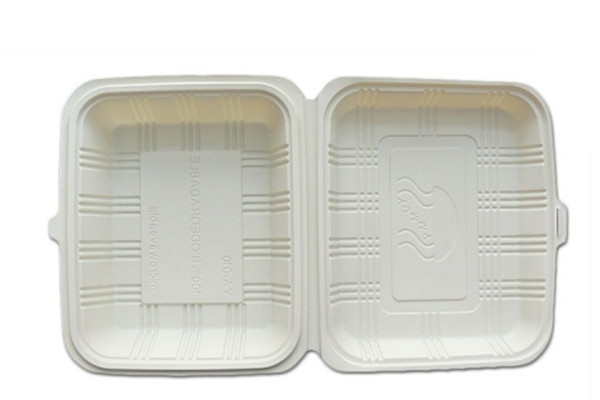 Benefits of disposable compostable tableware
Compostable tableware
Benefits of disposable compostable tableware
Compostable tableware have many benefits, but not everyone knows them. Organic waste in landfills produces methane, which is a potent greenhouse gas. By composting waste food and other organic matter, methane emissions are significantly reduced.
Composting reduces the need for fertilizer and keeps the soil fertile.
Composting can increase the yield of crops.
Composting can be a cost-effective way to restore soil contaminated by hazardous waste.
Commercial and home composting
Commercial composting facilities optimize the process to ensure rapid biodegradation of organic materials. Commercial compost comes in many varieties, as described below, and they all optimize each step of the decomposition process by controlling conditions, such as shredding materials to the same size or controlling temperature and oxygen levels. These measures ensure rapid degradation of organic materials to form high-quality, non-toxic soil fertilizers.
Home compost produces the same quality of compost to some extent, but they may not be able to maintain the required environment for some products under ideal conditions. Home composting is not good for meat, dairy products, etc., because the smell they give off attracts pests.
Take rubbish seriously
Australia and New Zealand, for example, dump more than 8 million tons of organic waste into landfills every year, and it needs to be addressed. Composting is an effective solution.
Governments and businesses around the world are responding to this growing tide of waste with relentless efforts to achieve zero waste. Organic waste entering landfills is a major problem. Landfills are not designed to promote biodegradation of waste, but to store it. Organic material processed in such anoxic environments slowly breaks down and releases methane, a greenhouse gas 80 times more potent than carbon dioxide.
Circular economy is a sustainable policy that is of great benefit to the environment. And now we're applying it to disposable food services and disposable packaging. This model requires us to use resources more efficiently, to recycle and use waste more efficiently. We envision a future in which there is little waste and only secondary materials are re-injected into the circular economy.
We are very proud to be an important partner for many companies that have achieved or are striving to achieve the goal of zero waste. Food service outlets in more than 140 countries around the world are using Hyde's biodegradable products. These
disposable compostable tableware (such as bagasse and cornstarch tableware) are processed in their multiple reuse facilities to create high-quality compost. You don't need to feel ashamed of the
disposable tableware being thrown away at will.
Robin Alwine
Market research expert
Senior paper products market research,Senior paper products market research, to provide you with the most authentic product information
Click to contact me

 Paper Package
 Paper Package
 Biodegradable Tableware


 4322
4322 21
21





 (Saudi Arabia) Submit Demand 45 Minutes Ago
 (Australia) Submit Demand 25 Minutes Ago
 (United Kingdom) Submit Demand 36 Minutes Ago
 (Sweden) Submit Demand 15 Minutes Ago