It sounds simple to pick a cup for ice cream, until you start serving it. The container that’s fine for a small gelato sample isn’t necessarily big enough for a regular scoop. A dessert bowl that looks good on a product page may not do as well after spending a few minutes in a freezer or during delivery.
For ice cream shops, dessert brands, catering companies and food packaging distributors, the decision involves more than appearance. Capacity, rim shape, moisture resistance, lid fit, storage space and landed cost all affect whether a packaging product works in daily operations.
Sugarcane bagasse ice cream cups are one option worth evaluating if you are looking for molded-fiber packaging for frozen desserts. This guide explains how they differ from conventional paper cups, which sizes to consider, what to test before ordering and how to compare wholesale suppliers.
Quick takeaway: Start with the portion you actually serve, then check the cup's dimensions, moisture resistance, freezer-use suitability and lid compatibility. A bagasse cup should be approved for your specific application rather than selected on material name alone.
What Are Sugarcane Bagasse Ice Cream Cups?
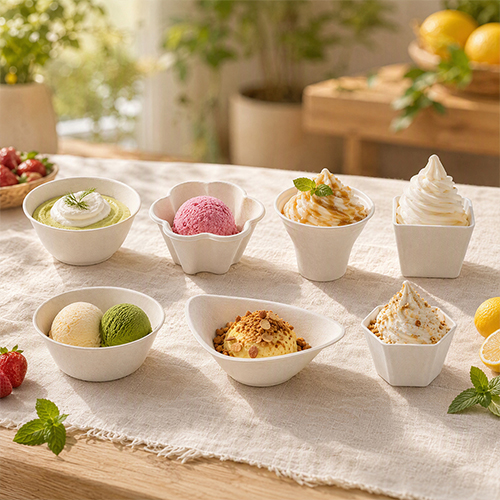
Sugarcane bagasse is the fibrous material left after sugarcane stalks are processed to extract their juice. Suitable fibers can be formed into molded packaging, including cups and bowls for foodservice applications.
Unlike a conventional paper cup made from a rolled paperboard wall, a molded-fiber cup is formed into its shape using a pulp-based process. This allows manufacturers to produce different profiles, rim shapes and bowl designs, depending on the available tooling.
For ice cream and dessert businesses, the main attraction is the molded-fiber appearance and the possibility of using a plant-fiber-based alternative to some conventional packaging formats. However, the actual performance depends on the finished product, not just the raw material.
Before choosing a product, check whether it is designed for direct food contact, whether it can handle the intended moisture level and how it performs at your serving temperature. Also confirm the exact material composition and any coatings or additives used in the finished item.
Hydepackage offers custom molded sugarcane fiber ice cream cups and dessert bowls for buyers evaluating molded-fiber packaging for frozen desserts and related foodservice uses.
Which Size of Bagasse Ice Cream Cup Should You Choose?
The right capacity depends on what you sell and how you serve it. A shop offering tasting portions has different requirements from a takeaway business selling a large sundae with toppings. Choosing a cup that is too small can make filling awkward, while an oversized bowl can increase packaging costs and take up more storage space.
Hydepackage lists small bagasse ice cream cup options in the 3 oz, 4 oz and 5 oz range, as well as other molded-fiber dessert bowl formats. Treat the following table as a starting point for selecting samples, not as a universal serving standard.
| Nominal capacity |
Potential applications |
What to check |
| 1–2 oz |
Tasting portions, small dessert samples and promotional servings |
Confirm that the available model is intended for the product and serving method you have in mind. |
| 3 oz |
Small ice cream portions, gelato samples and catering desserts |
Check the opening diameter and usable filling space, especially for thicker products. |
| 4 oz |
Small individual servings and compact takeaway desserts |
Test with your normal scoop size and any toppings you plan to include. |
| 5 oz |
Small-to-medium dessert portions and selected frozen yogurt servings |
Allow room for toppings and check whether the selected lid fits the rim. |
| 6–8 oz |
Individual desserts, larger scoops and selected takeaway portions |
Compare cup height, opening width and overall handling comfort. |
| 10–12 oz |
Larger dessert servings, layered treats and selected sundae formats |
Check stackability, lid clearance and whether the container suits your delivery packaging. |
One US fluid ounce is approximately 29.57 ml. Nominal capacity does not tell you the cup's exact dimensions or how much product can be filled comfortably once toppings and headspace are considered.
For larger molded-fiber dessert bowls, Hydepackage also lists custom scalloped flower bagasse ice cream dessert bowls in 200 ml, 280 ml and 450 ml formats. These may be worth comparing if presentation and a distinctive bowl shape matter to your product range.
A useful test: Fill the sample with your normal portion, add the toppings, fit the lid if required and place it in the packaging used for delivery. The best size is the one that works in the real workflow, not simply the one with the lowest unit price.
Are Bagasse Cups Suitable for Ice Cream and Frozen Yogurt?
They may be suitable for particular frozen dessert applications, but the material name alone is not enough to establish performance. Ice cream, frozen yogurt, gelato and soft-serve products can have different moisture levels, serving temperatures and holding times.
A cup used to serve a scoop immediately may face different conditions from one filled in advance, stored in a freezer or transported with toppings for delivery.
Before approving a bagasse cup for frozen desserts, ask the supplier about its recommended operating conditions and test the actual product with your intended use.
Check moisture resistance
Condensation can form when a cold dessert container is exposed to warmer air. Contact with melting ice cream can also introduce moisture to the cup's interior. Check whether the cup maintains its shape during the expected serving period and whether the base or sidewalls soften under your normal conditions.
Test freezer storage separately from serving
Do not assume that a cup suitable for serving a cold dessert is also suitable for long-term freezer storage. If you plan to fill cups in advance, stack them in a freezer or distribute prepacked desserts, test the product under the actual storage temperature and duration.
Ask the supplier for written guidance on the intended temperature range and any restrictions. If the packaging will be used for commercial frozen storage, conduct a representative trial before approving a bulk order.
Consider toppings and handling
Chocolate sauce, fruit, syrups and other toppings can change the way a dessert is filled and handled. A narrow opening may make it harder to add toppings cleanly, while a shallow bowl may not provide enough room for layered desserts.
Test the complete serving, not just the empty container. If staff need to apply a lid quickly during a busy service, the packaging should also be easy to fill, close and stack.
Bagasse vs. Paper vs. Plastic Ice Cream Cups
There is no single material that is best for every ice cream business. Molded bagasse, coated paperboard and plastic containers each have different design options and performance characteristics. The useful comparison is how each product performs under your actual conditions and what it costs to use.
| Factor |
Molded bagasse |
Coated paperboard |
Plastic |
| Appearance |
Distinct molded-fiber texture and shape options |
Suitable for printed graphics and branded designs, depending on construction |
Available in clear, opaque and colored formats |
| Branding |
Depends on the product, surface and available customization process |
Printing options are often a key benefit |
Depends on the material and manufacturing method |
| Moisture performance |
Must be verified for the finished cup and intended holding time |
Depends on the barrier coating and construction |
Depends on the plastic type and container design |
| Freezer use |
Requires product-specific verification |
Requires product-specific verification |
Requires product-specific verification |
| Lid compatibility |
Must be checked against the exact rim and cup model |
Must be checked against the exact rim and cup model |
Must be checked against the exact rim and cup model |
| End-of-life options |
Depend on the finished product, contamination and local composting facilities |
Depend on the paper, coating and local recycling or composting systems |
Depend on the polymer and local collection and recycling systems |
If printed branding is your priority, compare the available surface and customization methods before choosing a material. If you need a particular bowl shape, molded fiber may be worth evaluating alongside conventional paper cups.
If clear packaging is essential because customers need to see the dessert layers, a suitable plastic container may be a better fit. The final choice should balance presentation, performance, price and disposal requirements.
For a wider selection of formats, explore the Hydepackage ice cream cup collection, which includes multiple disposable cup and dessert packaging options.
Can Bagasse Ice Cream Cups Be Supplied with Lids?
Some cup designs can be supplied with compatible lids, but lid availability should never be assumed from capacity alone. Two cups with the same nominal volume may have different rim diameters, profiles or locking features.
Before ordering, confirm the following:
- Rim dimensions: Ask for the top diameter and rim profile of the selected cup.
- Matching lid model: Request the exact compatible lid rather than choosing one based only on the stated capacity.
- Closure performance: Test how easily the lid fits and whether it remains secure during normal handling.
- Stacking and delivery: Check whether the closed containers fit your delivery bags, trays and storage arrangements.
- Material details: Confirm the lid material and any applicable food-contact or environmental documentation separately from the cup.
If your dessert business relies on delivery, test a filled and closed container during a realistic transport trial. A lid that fits correctly is important, but the complete package still needs to be evaluated for movement, condensation and the risk of spills.
You can also compare the available ice cream cup formats and related packaging options when discussing the required cup-and-lid combination with the supplier.
What Should Wholesale Buyers Confirm Before Ordering?
When purchasing bagasse ice cream cups wholesale, the cheapest price per piece is not always the lowest overall cost. Cup dimensions, packing quantity, shipping volume, breakage or deformation during handling, and product suitability all affect the final result.
1. Capacity and dimensions
Ask for the nominal capacity, top diameter, base diameter and height of the specific model. If you have an existing container that works well, send a sample or dimensioned drawing so the supplier can compare the specifications.
2. Material and food-contact requirements
Confirm the material composition of the finished product and ask for the applicable food-contact documents for your destination market. If the cup includes coatings, additives or other components, request information relevant to the complete finished item.
3. Minimum order quantity and packaging
Minimum order quantities vary by model, production process and customization requirements. Ask how many cups are packed per carton, along with carton dimensions and gross weight. These details help you estimate warehouse space, shipping volume and landed cost.
4. Custom shapes and tooling
If you want a distinctive bowl shape or a different capacity, ask whether an existing mold can meet your requirements. A new mold may involve additional development costs, sampling time and minimum production quantities. Provide a reference sample or drawing if you have a specific design in mind.
5. Samples and quality approval
Request samples before committing to a large order. Test the cups with the actual dessert, toppings, temperature and serving time. Check for deformation, moisture problems, difficult filling and lid-fit issues. Keep an approved sample or specification as a reference for repeat orders.
6. Environmental claims and certification
Do not assume that every bagasse product is certified compostable simply because it is made from plant fibers. The finished product, coatings, additives, certification scope and local disposal conditions all matter.
If compostability is a purchasing requirement, ask for the relevant test reports or certificates for the exact product. Confirm whether the documentation covers industrial composting, home composting or another specified disposal condition. Use environmental claims that can be supported by the available evidence and comply with the rules in your target market.
7. Production lead time and shipping
Ask when the production lead time starts, whether artwork or sample approval is required first, and how the order will be packed. If you are importing regularly, confirm the shipping terms, destination requirements and expected reorder schedule before placing the initial order.
Wholesale inquiry checklist: Required capacity · Cup dimensions · Intended dessert and temperature · Lid requirement · Material documentation · Estimated quantity · Custom design · Carton packing · Lead time · Destination country.
Custom Sugarcane Bagasse Ice Cream Cups from Hydepackage
Hydepackage supplies disposable food packaging for foodservice businesses, distributors and other B2B buyers. Its current range includes small sugarcane bagasse ice cream cups and molded-fiber dessert bowls in different designs and capacities.
For buyers looking for compact servings, the small sugarcane bagasse ice cream cups in 3 oz, 4 oz and 5 oz options are a useful starting point for comparison. Buyers evaluating alternative shapes can also review the custom molded-fiber ice cream cups and dessert bowls.
If you need a distinctive presentation, review the scalloped flower bagasse dessert bowl range and ask whether the available models suit your serving size and branding requirements.
When requesting a quotation, include your target capacity, estimated order quantity, intended application, destination country and whether you need matching lids or a custom shape. If you have an existing container, provide its dimensions or send a reference sample where possible.
Before confirming a production order, request the relevant specifications and samples, and verify that the chosen cup performs as expected under your actual serving and storage conditions.
Looking for a suitable bagasse cup for your dessert range? Contact Hydepackage with your product requirements to discuss available models, customization options and wholesale pricing.
Frequently Asked Questions
What are sugarcane bagasse ice cream cups made of?
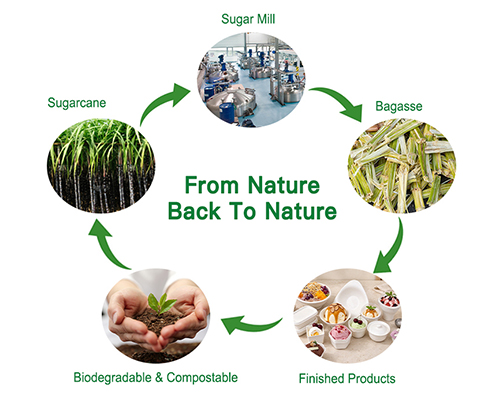
They are molded-fiber containers made using sugarcane bagasse or a specified fiber formulation. Confirm the exact composition of the finished product with the supplier, especially if material content or certification is a purchasing requirement.
What size bagasse cup is suitable for ice cream?
The best size depends on your serving volume and presentation. Small cups around 3 oz to 5 oz may suit tasting portions or compact servings, while larger formats may be better for generous scoops and layered desserts. Test samples with your actual serving before ordering.
Can bagasse cups be used for frozen yogurt?
Some models may be suitable, but you should confirm the recommended conditions for the exact product. Test the cup with your frozen yogurt, including the expected serving time, condensation and handling conditions.
Can I order bagasse ice cream cups with lids?
Lid availability depends on the selected cup model. Confirm the rim dimensions and compatible lid with the supplier, then test the complete cup-and-lid combination before approving a bulk order.
Are sugarcane bagasse ice cream cups compostable?
Some products may meet specific compostability standards, but this cannot be assumed for every finished cup. Request product-specific documentation and check whether the certification and disposal conditions match your market and intended claims.
Can I customize the size or shape of bagasse dessert bowls?
Customization depends on the manufacturer's available molds, production capabilities and order requirements. Share a dimensioned drawing or reference sample and ask whether an existing mold can be used or new tooling is needed.
What is the MOQ for wholesale bagasse ice cream cups?
The minimum order quantity depends on the product and customization requirements. Ask the supplier to confirm the MOQ for the specific model, any additional tooling or printing costs, and the packing details for your intended order volume.

 Paper Package
 Paper Package
 Biodegradable Tableware


 56172
 2359




 (Saudi Arabia) Submit Demand 45 Minutes Ago
 (Australia) Submit Demand 25 Minutes Ago
 (United Kingdom) Submit Demand 36 Minutes Ago
 (Sweden) Submit Demand 15 Minutes Ago